




 ? Message us on
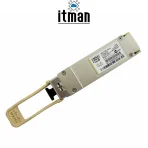
The Cisco QSFP-40G-SR4-S Transceiver Module is a high-performance optical networking solution designed to deliver reliable 40 Gigabit Ethernet connectivity across short-distance fiber optic links. Developed for enterprise networks, data centers, and high-bandwidth switching environments, this Cisco Module provides fast data transmission using multimode fiber technology. With its compact QSFP+ form factor, the module enables network administrators to expand switching capacity without requiring additional rack space. It is particularly suitable for connecting high-performance switches, building server aggregation networks, and supporting bandwidth-intensive applications where consistent throughput and low latency are essential.
Overview of Cisco QSFP-40G-SR4-S Transceiver Module
The Cisco QSFP-40G-SR4-S Transceiver Module belongs to Cisco’s 40GBASE-SR4 optical transceiver family and supports an aggregate data rate of 40 Gbps through four parallel optical lanes. Each lane operates at approximately 10 Gbps, allowing the module to transmit and receive data simultaneously over multimode fiber connections. Operating at a nominal wavelength of 850 nm, it supports transmission distances of up to 100 meters over OM3 fiber and 150 meters over OM4 fiber. The module uses an MPO/MTP-style multifiber connector and supports hot-swappable installation in compatible QSFP+ interfaces. As part of Cisco’s S-Class optics portfolio, it provides a cost-conscious option for standard 40 Gigabit Ethernet applications that do not require the additional features offered by certain other optical transceiver families.
Physical Design, Dimensions, and Build Quality
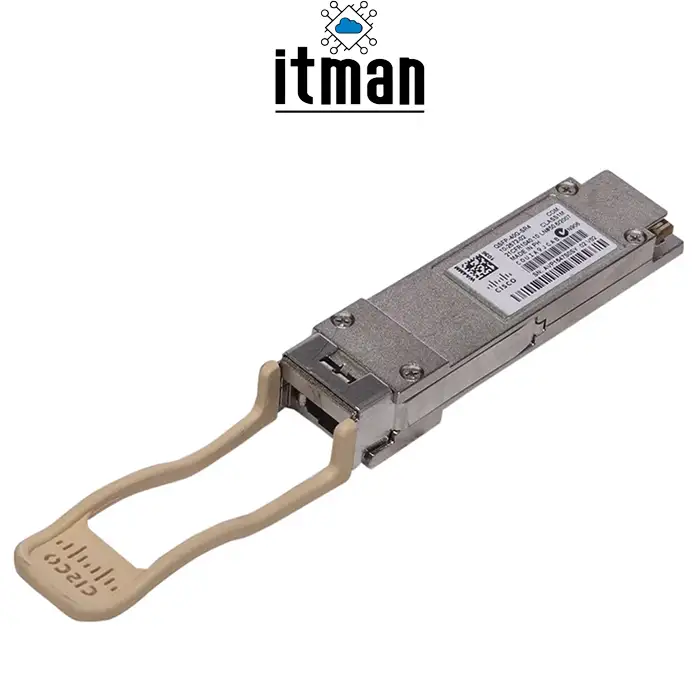
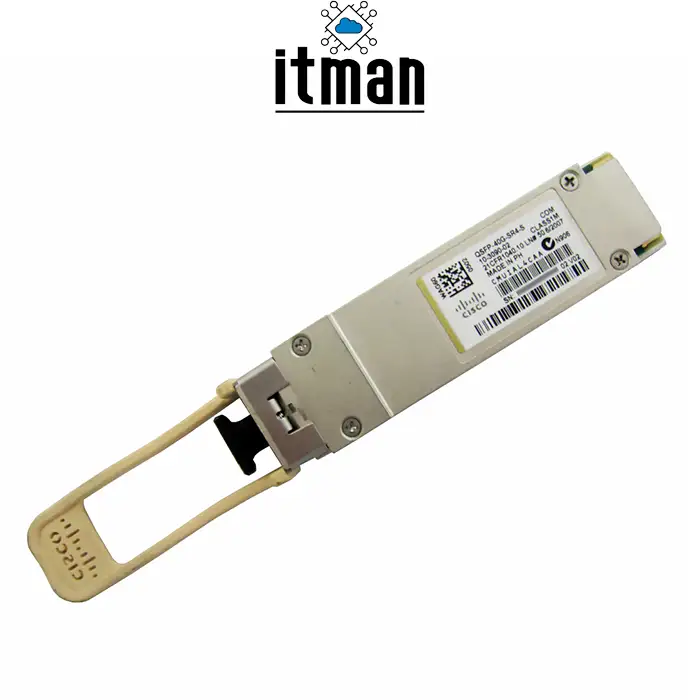
The Cisco QSFP-40G-SR4-S Transceiver Module features a compact metal housing engineered for high-density network equipment. Its QSFP+ design allows multiple optical modules to be installed alongside one another in compatible enterprise switches.
The durable enclosure helps protect internal optical components and assists with heat dissipation. A pull-tab or extraction mechanism makes installation and removal easier, while the front optical receptacle provides a secure connection for compatible multifiber cables.
The module is designed for demanding networking environments where stable operation, mechanical reliability, and efficient space utilization are important.
Applications of Cisco QSFP-40G-SR4-S Transceiver Module
The Cisco QSFP-40G-SR4-S Transceiver Module is primarily used to establish high-speed fiber connections between switches and other compatible networking devices. It is particularly valuable in data centers where large amounts of information must move between aggregation switches, server infrastructure, and storage networking equipment.
Typical applications include switch-to-switch uplinks, high-bandwidth network aggregation, enterprise backbone connections, and short-range data center interconnects.
Organizations upgrading from 10 Gigabit Ethernet to 40 Gigabit Ethernet can use this module to increase bandwidth while continuing to utilize suitable existing multimode fiber infrastructure.
Optical Interface and Connectivity
Unlike conventional Ethernet transceivers with RJ45 connections, the Cisco QSFP-40G-SR4-S Transceiver Module uses a single multifiber optical interface.
Its MPO-12 connection accommodates four transmit fibers and four receive fibers, with the remaining positions unused for the standard SR4 connection.
The module supports 40GBASE-SR4 connectivity through parallel optical transmission. It does not provide four independent physical ports, although the four optical lanes can support 4 × 10G breakout configurations on compatible Cisco platforms when the required software, interface settings, and cabling are supported.
Fiber Compatibility and Transmission Distance
Selecting the correct fiber type is essential when deploying the Cisco QSFP-40G-SR4-S Transceiver Module.
The module is optimized for multimode optical fiber, particularly OM3 and OM4 cabling. OM3 supports distances up to 100 meters, while OM4 extends the supported reach to 150 meters.
For installations requiring longer distances, a different optical transceiver, such as a compatible 40GBASE-LR4 model, may be necessary.
Network administrators should also verify MPO connector polarity, fiber cleanliness, and cable compatibility to prevent optical link failures.
Advantages of Cisco QSFP-40G-SR4-S Transceiver Module
One of the primary advantages of the Cisco QSFP-40G-SR4-S Transceiver Module is its ability to deliver 40 Gbps connectivity through a compact optical interface.
Its hot-swappable architecture simplifies maintenance and replacement without requiring the entire networking device to be powered down.
The module also offers an efficient upgrade path for organizations using compatible Cisco switches with available QSFP+ interfaces.
Additionally, its short-range optical design makes it practical for high-density networking environments where long-distance optical transmission is unnecessary.
Cisco QSFP-40G-SR4-S vs. Similar Cisco Transceiver Modules
Cisco offers several 40G optical modules with different transmission distances, fiber requirements, and connectivity features.
| Specification | QSFP-40G-SR4-S | QSFP-40G-SR4 | QSFP-40G-CSR4 | QSFP-40G-LR4-S |
|---|---|---|---|---|
| Data rate | 40 Gbps | 40 Gbps | 40 Gbps | 40 Gbps |
| Standard | 40GBASE-SR4 | 40GBASE-SR4 | 40GBASE-CSR4 | 40GBASE-LR4 |
| Wavelength | 850 nm | 850 nm | 850 nm | 1310 nm |
| Fiber type | MMF | MMF | MMF | SMF |
| Connector | MPO-12 | MPO-12 | MPO-12 | Duplex LC |
| Maximum distance | 150 m | 150 m | 400 m | 10 km |
| 4×10G breakout | No | Yes | Yes | No |
| Best application | Short-range 40G | 40G and breakout | Extended MMF links | Long-distance 40G |
The Cisco QSFP-40G-SR4-S Transceiver Module is an appropriate choice for standard 40G connections over short distances. For 4×10G breakout, the QSFP-40G-SR4 is preferable, while the CSR4 and LR4-S models support longer links.
How to Choose a Compatible Cisco Switch
Before purchasing the Cisco QSFP-40G-SR4-S Transceiver Module, verify that your networking equipment supports this specific optical model.
The switch must have a compatible 40G QSFP+ interface, and its operating system must recognize the transceiver. Cisco Catalyst and Nexus platforms may support this module, depending on the exact hardware model and software release.
Importantly, the QSFP-40G-SR4-S does not support 4×10G breakout or Fibre Channel over Ethernet (FCoE). These restrictions should be considered when planning network upgrades.
For accurate compatibility verification, consult the Cisco Optics-to-Device Compatibility Matrix.
Technical Specifications of Cisco QSFP-40G-SR4-S Transceiver Module
| Specification | Details |
|---|---|
| Manufacturer | Cisco |
| Product model | QSFP-40G-SR4-S |
| Product category | Optical transceiver |
| Transceiver family | S-Class |
| Form factor | QSFP+ |
| Ethernet standard | 40GBASE-SR4 |
| Aggregate data rate | 40 Gbps |
| Optical lanes | 4 transmit + 4 receive |
| Nominal wavelength | 850 nm |
| Wavelength range | 840–860 nm |
| Fiber type | Multimode fiber |
| Connector | MPO-12 |
| Fiber core diameter | 50 µm |
| Maximum distance OM3 | 100 meters |
| Maximum distance OM4/OM5 | 150 meters |
| Power consumption | 1.5 W |
| Maximum transmit power | +2.4 dBm per lane |
| Minimum transmit power | −7.6 dBm per lane |
| Receiver sensitivity | −9.5 dBm per lane |
| Maximum receive power | +2.4 dBm per lane |
| Hot-swappable | Yes |
| 4×10G breakout | Not supported |
| FCoE | Not supported |
| Pull-tab color | Beige |
| Laser safety | Class 1 |
| QSFP+ standard | SFF-8436 |
| IEEE compliance | IEEE 802.3ba |
| Typical deployment | Data centers and enterprise networks |
Specifications are based on Cisco’s official 40GBASE QSFP module documentation.
Frequently Asked Questions (FAQ)
1. Does Cisco QSFP-40G-SR4-S support 10 Gigabit Ethernet?
No. This model is intended for 40G Ethernet operation and does not support 4×10G breakout.
2. Can Cisco QSFP-40G-SR4-S work with single-mode fiber?
No. It is designed for multimode fiber. Single-mode connections require an appropriate alternative, such as the QSFP-40G-LR4-S.
3. Does this transceiver require a separate power supply?
No. It receives power directly from the compatible switch’s QSFP+ interface.
4. Can I connect two Cisco QSFP-40G-SR4-S modules together?
Yes. Two compatible modules can establish a 40G optical connection using correctly configured MPO multimode fiber cabling.
5. Does Cisco QSFP-40G-SR4-S support digital diagnostics?
QSFP+ modules provide management and monitoring capabilities, but the exact diagnostic information available depends on the module and host platform.
6. Can this module connect to a 100G QSFP28 port?
Only if the host device explicitly supports 40G operation and this particular transceiver in that port.
7. What happens if the fiber cable exceeds 150 meters?
The connection falls outside the specified supported distance and may experience errors or fail to establish a stable link.
8. Is Cisco QSFP-40G-SR4-S suitable for storage networks?
It can carry standard Ethernet storage traffic, such as iSCSI, but this S-Class module does not support FCoE.
9. Can I use third-party MPO cables?
Yes, provided the cables meet the required optical, connector, polarity, and fiber specifications.
10. How can I check whether the transceiver is recognized?
On supported Cisco devices, commands such as show interfaces transceiver detail can display transceiver information. Command availability varies by platform.
Conclusion
The Cisco QSFP-40G-SR4-S Transceiver Module provides reliable 40 Gbps optical connectivity for short-range enterprise and data center networks. Its 850 nm optical technology, MPO-12 connector, low 1.5 W power consumption, and compatibility with OM3 and OM4 multimode fiber make it a practical choice for high-speed switching infrastructure.
For businesses upgrading their network capacity, ITMan offers the Cisco QSFP-40G-SR4-S Transceiver Module as part of its enterprise networking product range. Contact ITMan to confirm availability, pricing, and compatibility with your Cisco equipment.























Reviews
There are no reviews yet.