










 ? Message us on
 Modern networks are no longer limited to simple routing and basic bandwidth management. With the rapid growth of data centers, ISPs, enterprise backbones, and high-speed fiber connections, routers must deliver extreme performance while remaining flexible and reliable. The MikroTik CCR2004-1G-12S+2XS Router is designed specifically for these demanding environments where high throughput, multiple 10G and 25G connections, and stable routing performance are critical. This model represents a major step forward in MikroTik’s Cloud Core Router lineup, combining powerful hardware with the flexibility of RouterOS.
Overview of the MikroTik CCR2004-1G-12S+2XS Router
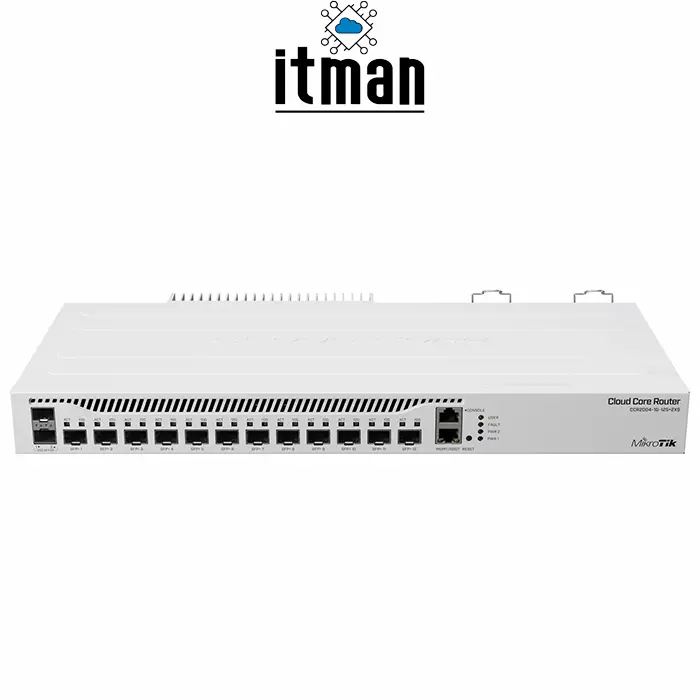
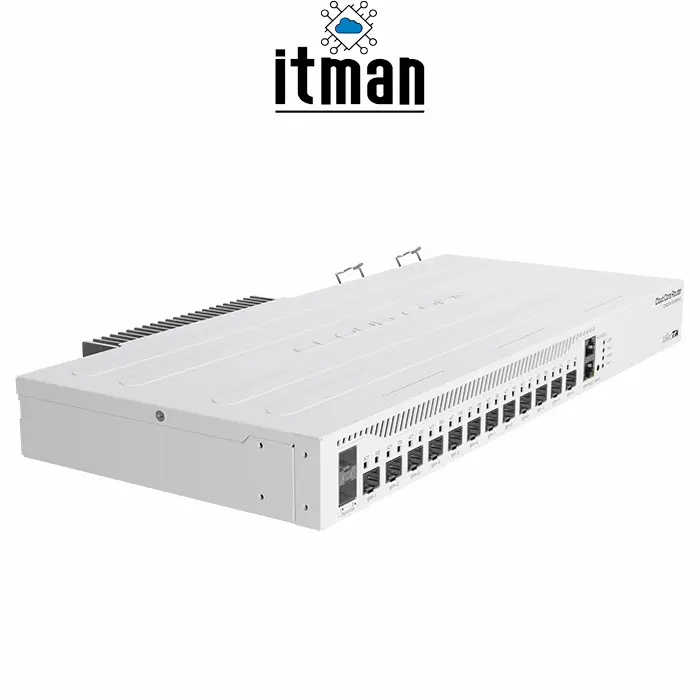
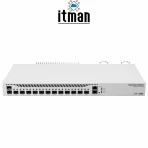
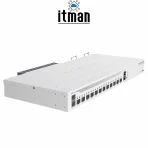
The CCR2004-1G-12S+2XS is a high-performance Cloud Core Router built around a modern ARM 64-bit processor and designed for heavy routing, aggregation, and fiber-based network scenarios. It features a unique port layout that includes twelve 10G SFP+ ports and two 25G SFP28 ports, making it ideal for core routing and high-density uplink deployments. Unlike older CCR models that relied heavily on multiple CPU cores with lower per-core performance, this router focuses on strong single-core performance, which is essential for many real-world routing and firewall tasks.
Hardware Architecture and Processing Power
At the heart of the CCR2004-1G-12S+2XS is a powerful ARM-based CPU running at high clock speeds, optimized for RouterOS workloads. This design allows the router to handle complex routing tables, BGP sessions, firewall rules, and VPN tunnels more efficiently than previous generations. The combination of fast CPU cores and high-speed memory ensures stable performance even under sustained traffic loads. This makes the CCR2004-1G-12S+2XS suitable for environments where consistent throughput is more important than peak benchmark numbers.
High-Speed Interfaces and Connectivity Options
One of the strongest advantages of the CCR2004-1G-12S+2XS is its port configuration. With twelve SFP+ ports supporting 10Gbps and two SFP28 ports supporting 25Gbps, this router can easily act as an aggregation point for access switches, wireless backhaul links, or data center uplinks. The single Gigabit Ethernet port is typically used for management purposes, keeping control traffic separate from high-speed data flows. This flexible interface design allows network engineers to build scalable and future-proof topologies.
Routing Performance and Real-World Throughput
The CCR2004-1G-12S+2XS is optimized for real-world routing scenarios rather than synthetic lab tests. It performs exceptionally well in tasks such as BGP routing, OSPF, MPLS, and advanced firewall filtering. Thanks to its modern CPU architecture, it maintains high throughput even when multiple services are enabled simultaneously. This makes it a strong choice for ISPs and enterprises that require predictable performance under mixed workloads, including NAT, VPN, and traffic shaping.
Advanced Features with RouterOS
RouterOS is one of MikroTik’s strongest assets, and the CCR2004-1G-12S+2XS fully benefits from it. The router supports advanced features such as BGP, OSPF, MPLS, VRF, VLANs, firewall rules, queues, and traffic monitoring tools. Network administrators can implement complex policies without the need for additional appliances. The flexibility of RouterOS allows this router to be used as a core router, border router, or even a high-capacity firewall depending on the network design.
Practical Use Case: High-Speed Fiber Aggregation
In fiber-based networks, aggregation routers play a critical role. The CCR2004-1G-12S+2XS is ideal for aggregating multiple 10G access links into one or two 25G uplinks toward the core. This setup is commonly used in ISP networks, large office campuses, and data centers. By consolidating traffic at high speeds, this router helps reduce bottlenecks and improves overall network efficiency without requiring overly complex hardware.
Practical Use Case: Data Center Edge Routing
Another practical application for the CCR2004-1G-12S+2XS is data center edge routing. The combination of SFP+ and SFP28 ports makes it suitable for connecting top-of-rack switches to core infrastructure. Its strong routing capabilities allow it to manage inter-VLAN routing, external BGP sessions, and traffic filtering at the data center edge. This reduces reliance on expensive proprietary routers while maintaining enterprise-grade performance.
Reliability, Cooling, and Power Design
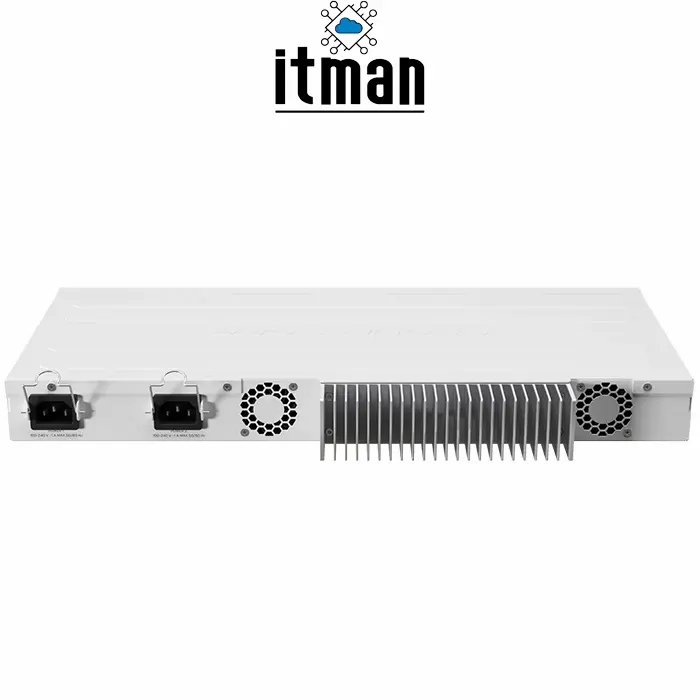
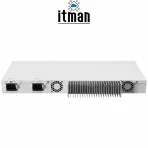
Reliability is a key consideration in core networking equipment. The CCR2004-1G-12S+2XS features a robust cooling system designed for continuous operation under heavy load. Efficient airflow and quality components help maintain stable temperatures even when all ports are active. The power design is optimized for long-term reliability, making this router suitable for environments where downtime is not an option.
Advantages of the CCR2004-1G-12S+2XS
The CCR2004-1G-12S+2XS offers a strong balance between performance, flexibility, and cost efficiency. Its high-speed interfaces allow easy scalability, while RouterOS provides unmatched configuration freedom. Compared to older CCR models, it delivers better real-world routing performance with lower power consumption. This makes it an attractive option for network engineers looking to upgrade legacy core routers without overspending.
Comparison with Similar MikroTik Models
| Model | CPU Architecture | High-Speed Ports | Max Port Speed | Typical Use Case |
|---|---|---|---|---|
| CCR2004-1G-12S+2XS | ARM 64-bit | 12x SFP+ + 2x SFP28 | 25Gbps | Core routing and aggregation |
| CCR2004-16G-2S+ | ARM 64-bit | 2x SFP+ | 10Gbps | Enterprise routing |
| CCR1036-8G-2S+ | Tile CPU | 2x SFP+ | 10Gbps | Legacy core routing |
| CCR2116-12G-4S+ | ARM 64-bit | 4x SFP+ | 10Gbps | High-performance edge routing |
This comparison shows that the CCR2004-1G-12S+2XS stands out for high-density fiber deployments where multiple 10G and 25G connections are required.
Scalability and Future-Proof Design
Networks grow quickly, and hardware must be able to adapt. The CCR2004-1G-12S+2XS is designed with future expansion in mind. The presence of 25G ports ensures compatibility with next-generation network upgrades. This allows organizations to scale bandwidth without replacing the entire routing platform, protecting long-term investment.
Security and Traffic Control Capabilities
Security is an integral part of modern networking. The CCR2004-1G-12S+2XS supports advanced firewall rules, connection tracking, and traffic shaping features. Administrators can implement granular security policies directly on the router, reducing the need for external firewalls in some scenarios. This is particularly useful for ISPs and enterprises managing large numbers of users or services.
Technical Specifications of MikroTik CCR2004-1G-12S+2XS
| Specification | Details |
|---|---|
| CPU | ARM 64-bit quad-core |
| RAM | High-speed DDR memory |
| Storage | NAND |
| Ethernet Ports | 1x Gigabit Ethernet |
| SFP+ Ports | 12x 10Gbps |
| SFP28 Ports | 2x 25Gbps |
| Operating System | RouterOS |
| Cooling | Active cooling |
| Mounting | Rack-mount |
| Typical Use | Core routing and aggregation |
Frequently Asked Questions (FAQ)
- What type of networks is the CCR2004-1G-12S+2XS best suited for?
It is best suited for ISP cores, data centers, and enterprise backbone networks requiring high-speed fiber connectivity. - Can the CCR2004-1G-12S+2XS handle full BGP tables?
Yes, it is capable of handling large routing tables with stable performance when properly configured. - Are the 25G ports backward compatible?
Yes, the SFP28 ports can operate at lower speeds depending on the transceiver used. - Is this router suitable for heavy firewall usage?
It performs well with firewall rules, though extremely complex filtering may impact throughput. - Can it be used as a replacement for older CCR1036 models?
In many scenarios, yes, especially where higher per-core performance is required. - Does it support MPLS and VRF?
Yes, both MPLS and VRF are fully supported in RouterOS. - Is the Gigabit Ethernet port usable for data traffic?
It can be used for data, but it is typically reserved for management. - How does it perform with VPN tunnels?
It performs well with common VPN protocols, though encryption load depends on configuration. - Is this router power-efficient compared to older CCRs?
Yes, it offers improved performance per watt compared to older architectures. - Can it be used in redundant core designs?
Yes, it supports redundancy protocols and is commonly used in high-availability setups.
Conclusion
The MikroTik CCR2004-1G-12S+2XS Router is a powerful and well-balanced solution for modern high-speed networks that demand reliability, scalability, and advanced routing capabilities. With its combination of twelve 10G SFP+ ports and two 25G SFP28 ports, it is clearly designed for core routing, fiber aggregation, and data center edge deployments.
What truly sets the CCR2004-1G-12S+2XS apart is its focus on real-world performance. The strong single-core CPU architecture ensures stable routing, firewall, and BGP performance even under continuous load. When combined with the flexibility of RouterOS, this router can adapt to a wide range of network designs without the need for additional hardware.
For ISPs, enterprises, and data centers looking to upgrade legacy core routers or build a future-proof network, the CCR2004-1G-12S+2XS offers an excellent balance between high-speed connectivity, advanced features, and long-term scalability. It is a practical investment for networks that need performance today and flexibility for tomorrow.


















Reviews
There are no reviews yet.