










 ? Message us on
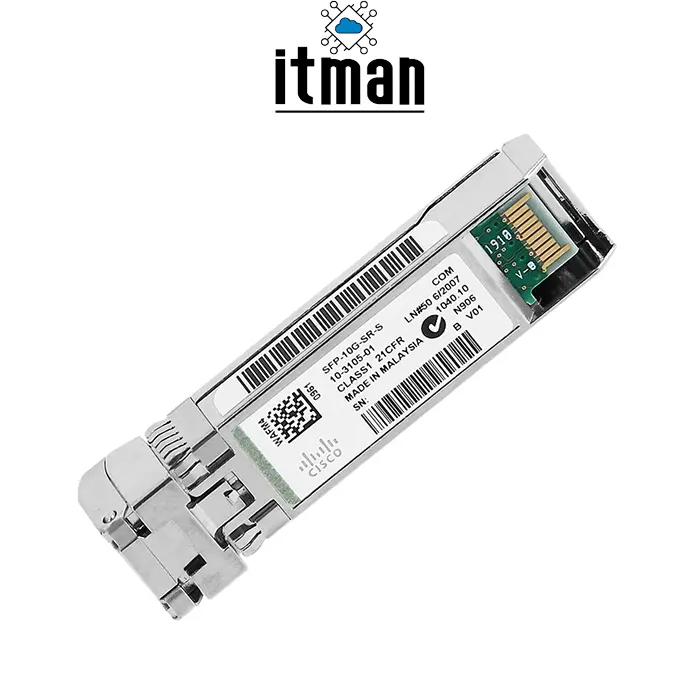
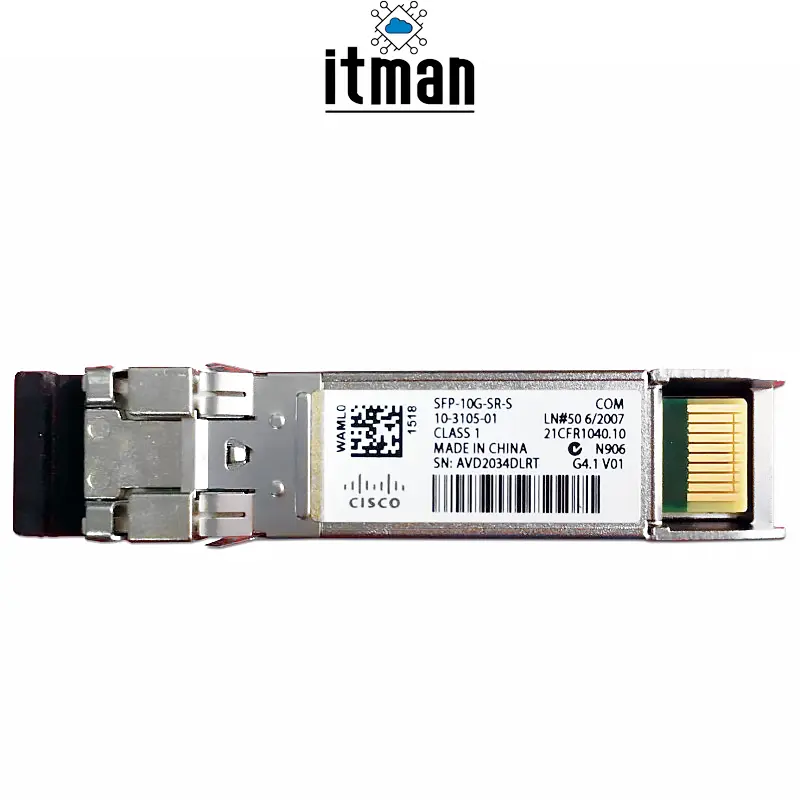
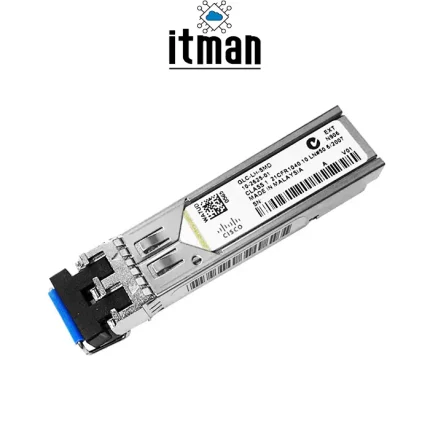
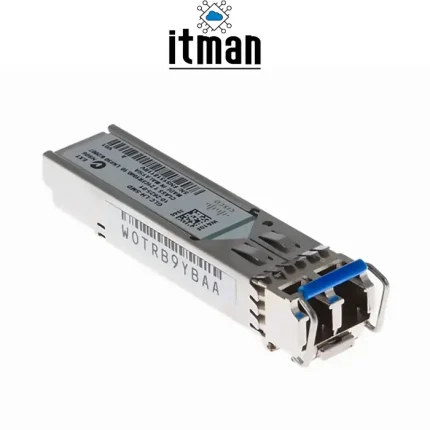
 The Cisco SFP-10G-SR-S Transceiver is a compact 10 Gigabit Ethernet optical module designed for short-range, high-speed network connections over multimode fiber. As part of Cisco’s S-Class portfolio, the SFP-10G-SR-S provides a practical solution for organizations that need reliable 10Gbps connectivity between compatible switches, routers, servers, and other network infrastructure. It operates at an 850 nm wavelength and uses an SFP+ form factor, making it particularly suitable for data centers, enterprise networks, server rooms, and high-bandwidth network uplinks. With support for transmission distances of up to 300 meters over OM3 fiber and 400 meters over OM4 fiber, this transceiver can handle many common short-distance 10 Gigabit Ethernet deployments without requiring more expensive long-range optics.
Cisco SFP-10G-SR-S Transceiver
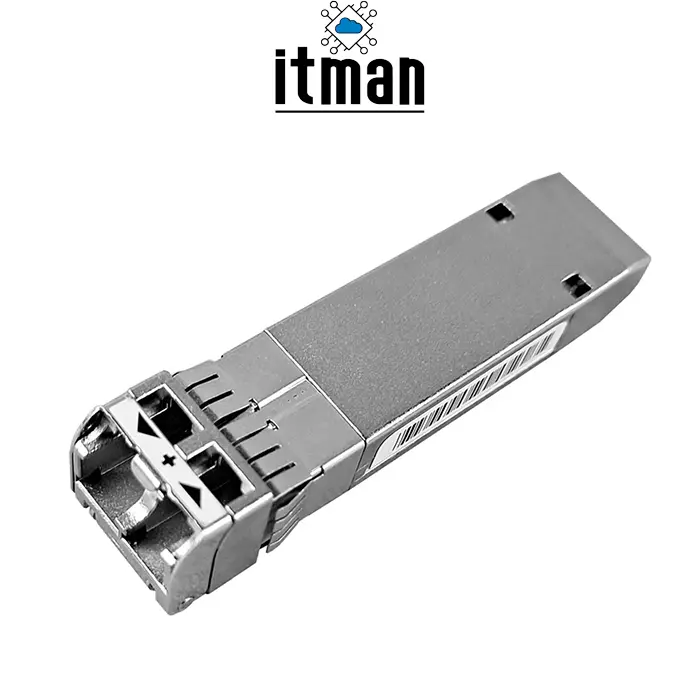
The SFP-10G-SR-S is based on the 10GBASE-SR standard and is intended primarily for multimode fiber infrastructure. It uses a dual LC/PC optical connector and supports Digital Optical Monitoring, allowing compatible Cisco equipment to provide useful diagnostic information about the optical link. The module is also hot-swappable, meaning it can be installed or replaced in a compatible SFP+ port without powering down the network device.
Another important characteristic of the SFP-10G-SR-S is its compact SFP+ design, which allows network equipment to provide a high density of 10Gbps interfaces while occupying relatively little physical space. Cisco specifies an optical wavelength range of 840 to 860 nm, with 850 nm as the nominal wavelength. Depending on the multimode fiber type and modal bandwidth, supported distances range from 26 meters on legacy FDDI-grade MMF to as much as 400 meters using OM4 or OM5 fiber. The S-Class SFP-10G-SR-S is therefore particularly well suited to standard Ethernet applications where advanced features such as FCoE are not required.
Applications of the Cisco SFP-10G-SR-S
The SFP 10G SR S is mainly used to establish 10 Gigabit Ethernet links within buildings, data centers, server rooms, network cabinets, and enterprise campuses. A common application is connecting an access or distribution switch to a core switch through multimode fiber where a 1Gbps uplink no longer provides sufficient bandwidth. It can also be used for switch-to-switch connections, network aggregation, high-speed server connectivity, and links between network racks located on different floors or areas of the same facility.
Because SFP-10G-SR-S supports up to 300 meters with OM3 and 400 meters with OM4 fiber, it covers considerably longer distances than typical passive direct-attach copper connections while maintaining 10Gbps Ethernet performance. This makes it useful when equipment is located in separate racks or telecommunications rooms and fiber cabling is already available.
For businesses upgrading from Gigabit Ethernet to 10 Gigabit Ethernet, the SFP-10G-SR-S can also provide a straightforward migration path when compatible Cisco equipment and multimode fiber infrastructure are already installed.
What Ports and Connectors Does SFP-10G-SR-S Use?
The Cisco SFP-10G-SR-S is designed to plug into a compatible SFP+ interface on Cisco networking equipment. SFP+ is the physical transceiver form factor used to provide the 10Gbps connection, while the optical side of the module uses a dual LC/PC connector. Two fiber strands are therefore normally required: one for transmitting data and another for receiving data.
The module should be connected using compatible multimode fiber and LC patch cables. Cisco specifies PC or UPC connector-based patch cords for these optical modules and does not support APC patch cords for this application. When choosing fiber, OM3 and OM4 are generally the most practical options for modern installations because they provide significantly greater transmission distances than older multimode fiber standards.
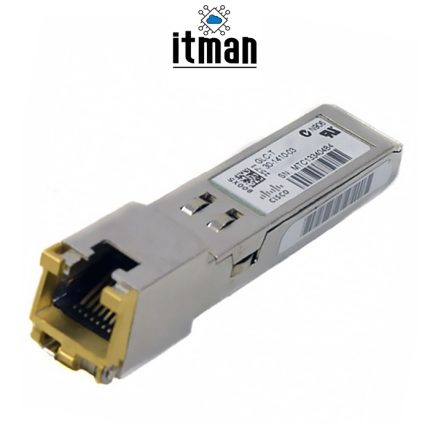
It is also important to distinguish an SFP+ port from a standard RJ45 Ethernet port. The SFP-10G-SR-S cannot be inserted into an RJ45 interface, and it should only be installed in equipment with a compatible SFP+ port and supported software/platform combination.
SFP-10G-SR-S Fiber Type and Transmission Distance
One of the most important factors when selecting the SFP 10G SR S is the type of multimode fiber used in the network. Although the transceiver operates at the same 850 nm nominal wavelength, maximum transmission distance changes considerably according to the fiber specification.
On standard FDDI-grade multimode fiber with a modal bandwidth of 160 MHz·km, Cisco specifies a maximum distance of approximately 26 meters. With OM1 fiber at 200 MHz·km, the distance increases to approximately 33 meters. Depending on its modal bandwidth, 50-micron multimode fiber can support approximately 66 or 82 meters.
The most relevant figures for modern networks are OM3 and OM4. Using 2000 MHz·km OM3 fiber, SFP-10G-SR-S can provide a 10Gbps link of up to 300 meters. With 4700 MHz·km OM4 fiber, the supported distance increases to 400 meters. Cisco’s current documentation also lists up to 400 meters over OM5.
This flexibility makes SFP-10G-SR-S suitable for everything from short rack-to-rack fiber connections to backbone links running between different telecommunications rooms within a large building.
Digital Optical Monitoring on SFP-10G-SR-S
Digital Optical Monitoring is an important feature of Cisco SFP+ optical transceivers because it can help network administrators monitor the operating condition of an optical link. On supported Cisco equipment, optical diagnostic information can be used during installation, maintenance, and troubleshooting instead of relying only on whether the interface is simply up or down.
This is particularly useful when investigating intermittent connectivity, excessive fiber loss, dirty connectors, damaged patch cables, or an optical signal operating close to the receiver threshold. Cisco lists Digital Optical Monitoring among the diagnostic capabilities of its SFP+ module family.
For network administrators managing multiple fiber uplinks, this visibility can make preventive maintenance and fault isolation considerably easier.
SFP-10G-SR-S vs Similar Cisco Transceivers
Cisco offers several 10Gbps SFP+ optical modules, and the correct model depends mainly on fiber type, transmission distance, operating environment, and required network features.
| Model | Standard | Wavelength | Fiber | Maximum Distance | Typical Use |
|---|---|---|---|---|---|
| SFP-10G-SR-S | 10GBASE-SR | 850 nm | MMF | 400 m on OM4 | Standard short-range 10G Ethernet |
| SFP-10G-SR | 10GBASE-SR | 850 nm | MMF | 400 m on OM4 | Short-range 10G Ethernet |
| SFP-10G-SR-X | 10GBASE-SR/SW | 850 nm | MMF | 400 m on OM4 | Extended-temperature applications |
| SFP-10G-LR-S | 10GBASE-LR | 1310 nm | SMF | 10 km | Long-distance single-mode links |
| SFP-10G-ER-S | 10GBASE-ER | 1550 nm | SMF | 40 km | Long-distance network links |
The SFP-10G-SR-S and standard SFP-10G-SR have very similar fundamental optical characteristics for normal 10GBASE-SR Ethernet applications. The SFP-10G-SR-S belongs to Cisco’s S-Class portfolio and is aimed at standard Ethernet applications. One important limitation is that Cisco specifically states that SFP-10G-SR-S does not support FCoE.
The SFP-10G-SR-X is more appropriate where an extended operating-temperature capability or its additional supported applications are required. For distances beyond several hundred meters, however, a short-range MMF transceiver is no longer appropriate. SFP-10G-LR-S uses 1310 nm optics and single-mode fiber to reach up to 10 km, while SFP-10G-ER-S extends this considerably further to approximately 40 km.
Why Choose SFP-10G-SR-S for a 10Gbps Network?
For a network that already uses multimode fiber, SFP 10G SR S provides an efficient way to deploy 10 Gigabit Ethernet without moving to long-range single-mode optics where they are unnecessary. The 300-meter OM3 and 400-meter OM4 limits are sufficient for a large proportion of enterprise and data-center connections.
The hot-swappable design is another operational advantage. A failed module can normally be replaced without shutting down the entire switch, helping reduce maintenance disruption. Its compact SFP+ form factor also enables high port density in compatible switches.
Cisco equipment can additionally identify certified Cisco transceiver modules through Cisco’s quality identification functionality. For production environments where hardware compatibility and predictable optical performance are important, using an appropriate Cisco transceiver can reduce uncertainty compared with installing an unknown optical module.
Customers looking for the Cisco SFP-10G-SR-S can purchase this transceiver from ITMan for use with compatible Cisco networking equipment. Before ordering, it is recommended to confirm the exact switch or router model and fiber type to ensure the module is appropriate for the intended network.
Cisco SFP-10G-SR-S Technical Specifications
| Specification | SFP-10G-SR-S |
|---|---|
| Manufacturer | Cisco |
| Product Model | SFP-10G-SR-S |
| Product Type | Optical Transceiver Module |
| Form Factor | SFP+ |
| Ethernet Standard | 10GBASE-SR |
| Data Rate | 10 Gigabit Ethernet |
| Nominal Wavelength | 850 nm |
| Optical Wavelength Range | 840–860 nm |
| Fiber Type | Multimode Fiber (MMF) |
| Connector | Dual LC/PC |
| Maximum Distance on FDDI MMF | 26 m |
| Maximum Distance on OM1 | 33 m |
| Maximum Distance on 50 µm / 400 MHz·km MMF | 66 m |
| Maximum Distance on OM2 / 500 MHz·km MMF | 82 m |
| Maximum Distance on OM3 | 300 m |
| Maximum Distance on OM4 | 400 m |
| Maximum Distance on OM5 | 400 m |
| OM3 Modal Bandwidth | 2000 MHz·km |
| OM4 Modal Bandwidth | 4700 MHz·km |
| Maximum Transmit Power | -1.2 dBm |
| Minimum Transmit Power | -7.3 dBm |
| Maximum Receive Power | -1.0 dBm |
| Minimum Receive Power | -9.9 dBm |
| Digital Optical Monitoring | Supported |
| Hot-Swappable | Yes |
| FCoE Support | No |
| Typical Application | Short-range 10GbE optical connectivity |
The optical and cabling values above are based on Cisco’s published specifications for the SFP-10G-SR-S.
FAQ About Cisco SFP-10G-SR-S
What is the Cisco SFP-10G-SR-S?
The SFP-10G-SR-S is a Cisco S-Class 10GBASE-SR SFP+ optical transceiver designed to provide 10 Gigabit Ethernet connectivity over multimode fiber.
What wavelength does SFP-10G-SR-S use?
It operates at a nominal wavelength of 850 nm, with Cisco specifying an optical wavelength range of 840 to 860 nm.
What is the maximum distance of SFP-10G-SR-S?
It supports up to 300 meters over OM3 multimode fiber and up to 400 meters over OM4 or OM5 multimode fiber.
Does SFP-10G-SR-S work with single-mode fiber?
It is designed for multimode fiber. For long-distance single-mode applications, Cisco modules such as SFP-10G-LR-S are more appropriate.
What connector does SFP-10G-SR-S use?
The module uses a dual LC/PC optical connector.
Is SFP-10G-SR-S hot-swappable?
Yes. It is designed as a hot-swappable SFP+ transceiver, allowing installation or replacement without shutting down compatible networking equipment.
Does SFP 10G SR S support Digital Optical Monitoring?
Yes. Cisco SFP+ optical modules provide Digital Optical Monitoring capabilities that can assist with link diagnostics and monitoring.
Does SFP-10G-SR-S support FCoE?
No. Cisco specifically states that the S-Class SFP-10G-SR-S does not support Fibre Channel over Ethernet (FCoE).
What is the difference between SFP-10G-SR-S and SFP-10G-LR-S?
SFP-10G-SR-S uses 850 nm multimode fiber and reaches up to 400 meters, while SFP-10G-LR-S uses 1310 nm single-mode fiber and supports distances of up to 10 km.
Can SFP 10G SR S be used with OM4 fiber?
Yes. OM4 is one of the best choices for this module and supports 10Gbps transmission distances of up to 400 meters.
Can SFP-10G-SR-S be used with OM3 fiber?
Yes. With OM3 multimode fiber rated at 2000 MHz·km, Cisco specifies a maximum link distance of 300 meters.
Can I install SFP-10G SR-S in any Cisco switch?
Not necessarily. The switch must have a compatible SFP+ interface and support the specific transceiver. Cisco platform and software compatibility should therefore be checked before purchase.
Conclusion
The Cisco SFP-10G-SR-S is a practical optical transceiver for building reliable short-range 10 Gigabit Ethernet links over multimode fiber. Its 850 nm optics, dual LC connectivity, compact SFP+ form factor, Digital Optical Monitoring capability, and support for distances of up to 300 meters on OM3 and 400 meters on OM4 make it suitable for enterprise networks, data centers, server rooms, and high-speed switch uplinks.
For networks that do not require long-distance single-mode transmission or FCoE support, SFP-10G-SR-S provides the core capabilities required for standard 10GbE fiber connectivity. ITMan supplies the Cisco SFP-10G-SR-S for customers looking to deploy, upgrade, or replace Cisco 10 Gigabit Ethernet optical connections.

























Reviews
There are no reviews yet.