









 ? Message us on
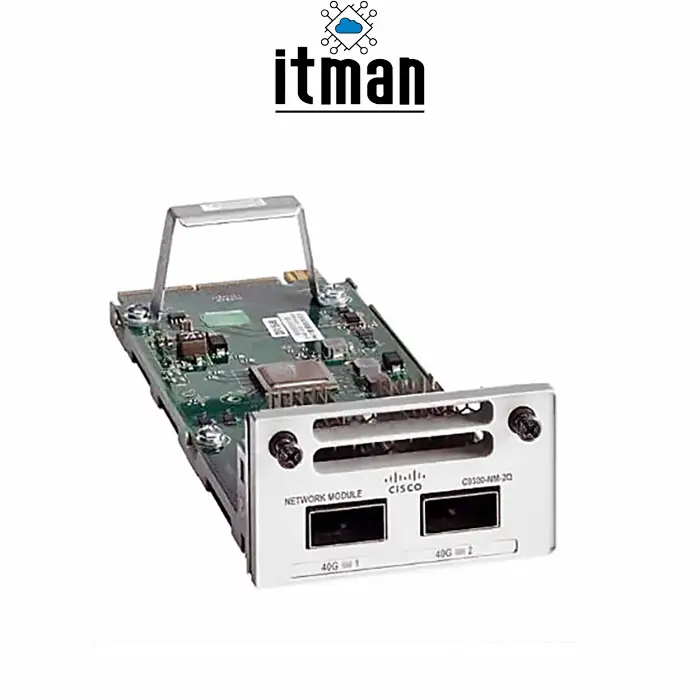
 The Cisco C9300-NM-2Q Network Module is a high-speed uplink expansion module designed for compatible Cisco Catalyst 9300 Series switches. Built for enterprise networks that require substantially more uplink bandwidth than conventional 1G or 10G connections, the C9300-NM-2Q provides two 40 Gigabit Ethernet QSFP+ interfaces. This makes it particularly useful for connecting access-layer switches to distribution or core infrastructure, building high-capacity switch-to-switch links, and supporting environments where large volumes of network traffic must be transported efficiently. For organizations already using the Catalyst 9300 platform, this module provides a practical way to add high-speed fiber connectivity without replacing the entire switch.
Cisco C9300-NM-2Q Network Module
The C9300-NM-2Q is an optional modular uplink solution specifically designed for Cisco Catalyst 9300 switches with modular network-module support. Its two QSFP+ slots can operate as two 40GE uplinks, providing up to 80 Gbps of aggregate physical port capacity when both interfaces are used at 40G. The module also offers additional deployment flexibility through supported 4x10G breakout configurations, allowing a 40G interface to be divided into four 10G interfaces when an appropriate breakout solution is used. This combination of high bandwidth, modularity, and flexible interface configuration makes the C9300-NM-2Q suitable for enterprise campus networks, server environments, aggregation deployments, and high-traffic network infrastructures. The Cisco C9300-NM-2Q is also available from ITMan for customers looking to upgrade compatible Catalyst 9300 switching environments.
Processing Architecture of the C9300-NM-2Q
Unlike a standalone switch, router, or server, the C9300-NM-2Q does not contain an independent general-purpose processor that runs Cisco IOS XE or performs the primary switching functions. It operates as an uplink network module installed inside a compatible Catalyst 9300 switch and relies on the host switch architecture for control, management, and packet-processing functions.
This distinction is important when evaluating the C9300 NM 2Q. Its performance should not be assessed according to CPU specifications but rather according to its interface capabilities. The module extends the physical uplink connectivity of the Catalyst 9300 platform by providing two high-bandwidth 40GE interfaces. Network configuration and monitoring remain integrated with the Cisco IOS XE environment running on the host switch.
RAM and Memory
The Cisco C9300-NM-2Q does not have user-addressable RAM comparable to the system memory found in a switch, server, or computer. Memory-intensive functions such as routing tables, system processes, network management, and Cisco IOS XE operations are handled by the Catalyst 9300 switch in which the module is installed.
For this reason, a separate RAM capacity is not normally specified for the C9300-NM-2Q. When selecting this module, administrators should focus on the host Catalyst 9300 model, uplink requirements, supported optics, and desired interface configuration rather than looking for a standalone memory specification.
Storage
The C9300-NM-2Q also does not include independent user storage such as an SSD, HDD, or configurable flash drive. Operating system files, configuration files, logs, and other persistent data are maintained by the host Cisco Catalyst 9300 switch.
The C9300-NM-2Q should therefore be viewed as a modular connectivity component rather than a separate computing device. Its purpose is to expand uplink capabilities, while the switch itself provides the operating environment and system resources required for network operation.
Design, Build Quality, and Physical Construction
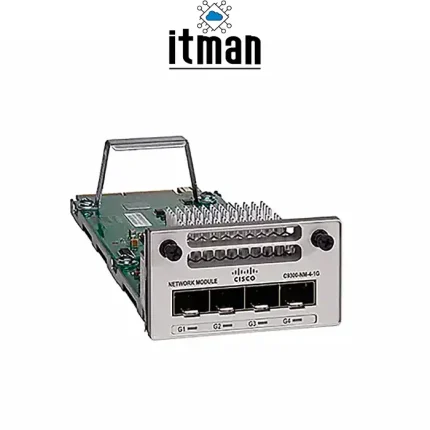
The C9300-NM-2Q features Cisco’s compact modular design intended to fit directly into the network-module bay of supported Catalyst 9300 switches. The front panel is dominated by two QSFP+ cages, allowing high-speed transceivers or supported cable assemblies to be installed without consuming additional rack space.
Its metal construction is designed for enterprise networking environments where equipment may remain operational continuously for long periods. The module integrates into the switch chassis rather than functioning as an external adapter, helping maintain a clean rack installation and reducing unnecessary external hardware.
Cisco also designs the Catalyst 9300 network modules to be hot-swappable. This provides additional serviceability for enterprise deployments, although administrators should always follow Cisco’s installation procedures and verify the operational impact before replacing or installing network hardware in a production environment.
Applications of the C9300-NM-2Q
The primary application of the C9300-NM-2Q is providing high-speed uplinks for Cisco Catalyst 9300 switches. A typical enterprise access switch may connect dozens of endpoints, wireless access points, IP phones, cameras, servers, or other devices. As traffic from these endpoints is aggregated, a conventional 1G uplink can become a bottleneck.
With two 40GE QSFP+ interfaces, the C9300-NM-2Q can provide substantially greater uplink capacity. It can be used for switch-to-switch connections, access-to-distribution links, connections to high-capacity aggregation infrastructure, and other scenarios requiring higher bandwidth.
It is particularly relevant in networks with dense Wi-Fi deployments, large numbers of users, virtualization traffic, high-volume data transfers, or other applications where aggregated access-layer traffic can exceed traditional uplink capacity.
Ports on the Cisco C9300-NM-2Q
The C9300-NM-2Q includes two 40 Gigabit Ethernet QSFP+ module slots. With standard 40G QSFP connectivity, each interface can operate as a 40GE link, giving administrators two high-speed uplink interfaces.
One of the most useful characteristics of the C9300-NM-2Q is support for breakout operation. A 40G interface can be divided into four 10G interfaces using a supported 4x10G breakout cable configuration. When both ports are used in breakout mode, the module can expose up to eight 10G interfaces logically.
It is also possible to use a combination of 40G QSFP connectivity and breakout connectivity, providing additional flexibility when integrating the Catalyst 9300 into an existing network.
Why Use the C9300-NM-2Q Instead of Multiple 10G Uplinks?
The main advantage of the C9300-NM-2Q is uplink density at higher bandwidth. Instead of relying exclusively on multiple individual 10G links, an organization can establish 40G connectivity between compatible network devices.
This can simplify network design where a high-capacity backbone is required and can provide more bandwidth for aggregated traffic from the access layer. The ability to use breakout connectivity is also valuable because an organization can deploy 40G where needed while retaining the possibility of multiple 10G connections in suitable configurations.
For networks currently using 10G uplinks but expecting higher future traffic, the C9300-NM-2Q can therefore provide a useful upgrade path within the Catalyst 9300 architecture.
Choosing the Right QSFP+ Solution for the C9300-NM-2Q
Choosing the module is only one part of designing the uplink. The appropriate QSFP+ transceiver or cable depends on the required distance, fiber infrastructure, connected equipment, and network topology.
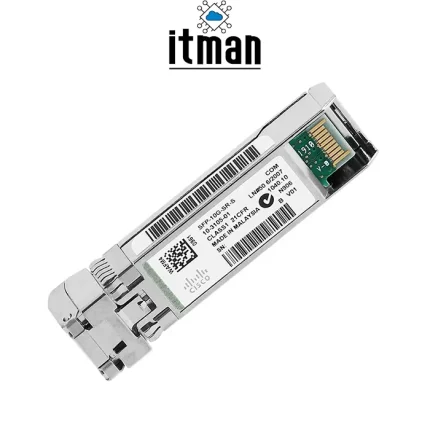
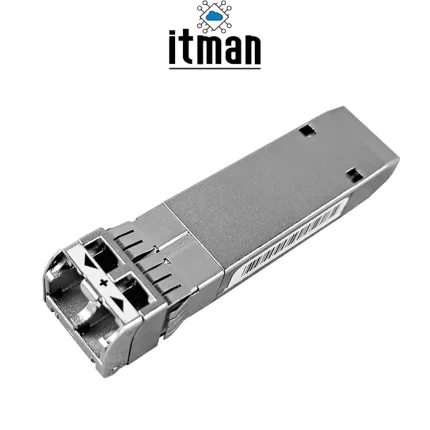
For short connections inside racks or data rooms, compatible direct-attach or other supported cable solutions may be appropriate. Fiber-based QSFP+ optics are generally more suitable when longer distances are involved. Before deployment, administrators should verify transceiver and cable compatibility with the exact Catalyst 9300 hardware and Cisco IOS XE release being used.
Breakout requirements should also be planned in advance. If four individual 10G connections are required from a 40G interface, the correct breakout cable and compatible remote interfaces are necessary.
C9300-NM-2Q vs Other Cisco Catalyst 9300 Network Modules
Cisco offers several uplink network modules for the Catalyst 9300 platform, allowing organizations to select an interface configuration based on bandwidth and network architecture.
| Feature | C9300-NM-4G | C9300-NM-8X | C9300-NM-2Y | C9300-NM-2Q |
|---|---|---|---|---|
| Primary Interface Type | SFP | SFP+ | SFP28 | QSFP+ |
| Number of Ports | 4 | 8 | 2 | 2 |
| Primary Maximum Port Speed | 1 Gbps | 10 Gbps | 25 Gbps | 40 Gbps |
| Primary Configuration | 4 x 1GE | 8 x 10GE | 2 x 25GE | 2 x 40GE |
| High-Speed Uplink Focus | Low | Medium | High | Very High |
| 40GE Connectivity | No | No | No | Yes |
| 4x10G Breakout Capability | No | Not applicable | Not applicable | Yes |
| Typical Use | Basic uplinks | Multiple 10G uplinks | 25G infrastructure | High-bandwidth 40G uplinks |
| Connector Family | SFP | SFP+ | SFP28 | QSFP+ |
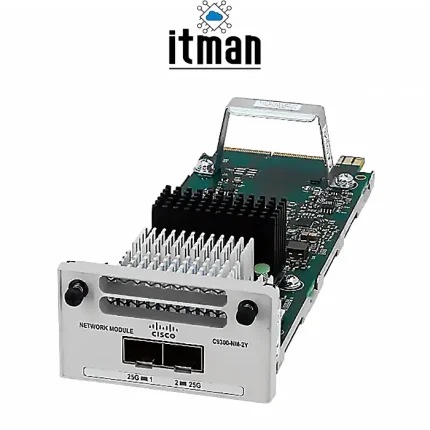
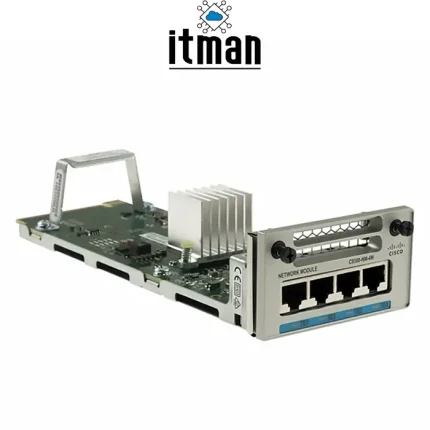
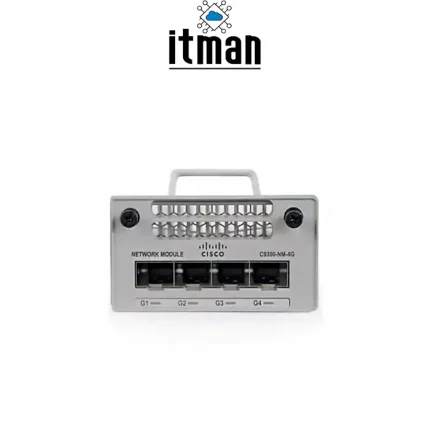
The C9300-NM-4G is appropriate for environments that require standard 1GbE uplinks. The C9300-NM-8X provides considerably more interface density with eight 10GE SFP+ ports. The C9300-NM-2Y targets networks using 25GbE SFP28 connectivity, while the C9300-NM-2Q focuses on two high-capacity 40GbE QSFP+ uplinks.
The correct choice therefore depends on the topology. Networks requiring many separate 10G connections may benefit from the C9300-NM-8X, while environments requiring 40G backbone connectivity are better aligned technically with the C9300-NM-2Q.
Technical Specifications of Cisco C9300-NM-2Q
| Specification | Details |
|---|---|
| Product Name | Cisco Catalyst 9300 2 x 40GE QSFP Network Module |
| Product ID | C9300-NM-2Q |
| Product Type | Uplink Network Module |
| Platform | Cisco Catalyst 9300 Series |
| Number of Physical Uplink Slots | 2 |
| Interface Type | QSFP+ |
| Primary Port Speed | 40 Gigabit Ethernet |
| Primary Configuration | 2 x 40GE |
| Aggregate Physical Port Capacity | Up to 80 Gbps |
| Breakout Support | Yes |
| Breakout Configuration | 4 x 10G per 40G port with supported breakout solution |
| Maximum Logical 10G Interfaces in Full Breakout | Up to 8 |
| Mixed 40G / 4x10G Configuration | Supported |
| Independent CPU | No |
| Independent User RAM | No |
| Independent Storage | No |
| Operating System | Managed through host Catalyst 9300 / Cisco IOS XE |
| Installation Type | Modular, internal network-module bay |
| Hot-Swappable | Yes |
| Main Application | High-speed uplink connectivity |
| Typical Network Role | Access-to-distribution, aggregation, switch-to-switch uplink |
| Transceiver Form Factor | QSFP+ |
| C9300X Compatibility | C9300X uses its own C9300X network-module family; verify exact platform before purchase |
FAQ About the C9300-NM-2Q
1. What is the Cisco C9300-NM-2Q?
The C9300 NM 2Q is an optional uplink network module for supported Cisco Catalyst 9300 switches that provides two 40 Gigabit Ethernet QSFP+ slots.
2. How many ports does the C9300-NM-2Q have?
It has two physical QSFP+ uplink slots.
3. What is the maximum speed of each C9300-NM-2Q port?
Each primary QSFP+ interface supports a 40 Gigabit Ethernet connection.
4. Does the C9300-NM-2Q support 10G?
Yes. Cisco supports 4x10G breakout operation, allowing a 40G port to be divided into four 10G interfaces when the appropriate supported breakout solution is used.
5. Can both C9300-NM-2Q ports be used in breakout mode?
Yes. With two 4x10G breakout connections, the module can provide up to eight logical 10G interfaces.
6. Can I use one port at 40G and the other as 4x10G?
Yes. Cisco documents support for combining 40G QSFP connectivity with 4x10G breakout configurations.
7. Is C9300-NM-2Q an SFP+ module?
No. Its physical interfaces are QSFP+ slots. SFP+ and QSFP+ are different form factors.
8. Does the C9300-NM-2Q have its own processor and RAM?
It does not operate as an independent computing device. Processing, system memory, management, and Cisco IOS XE functions are provided by the host Catalyst 9300 switch.
9. Is the C9300-NM-2Q hot-swappable?
Yes. Cisco identifies the Catalyst 9300 network modules as hot-swappable. Proper operational procedures should still be followed when servicing production equipment.
10. What is the difference between C9300-NM-2Q and C9300-NM-8X?
The C9300-NM-2Q provides two 40GE QSFP+ slots, while the C9300-NM-8X provides eight 10GE SFP+ slots. The better configuration depends on whether the network requires high-capacity 40G links or a larger number of individual 10G interfaces.
11. What is the difference between C9300-NM-2Q and C9300-NM-2Y?
The C9300 NM 2Q provides two 40GE QSFP+ interfaces, whereas the C9300-NM-2Y provides two 25GE SFP28 interfaces. They target different uplink speeds and optical form factors.
12. Is the C9300-NM-2Q suitable for enterprise networks?
Yes. It is designed for the Catalyst 9300 enterprise switching platform and is particularly useful where high-bandwidth uplinks are required between access, distribution, and aggregation infrastructure.
13. Does the C9300-NM-2Q include QSFP+ transceivers?
The network module and optical transceivers are separate components unless a particular seller or package explicitly states otherwise. The required QSFP+ optics or cables should be selected according to the intended connection.
14. Where can I buy the Cisco C9300-NM-2Q?
The Cisco C9300-NM-2Q is available from ITMan. Customers can contact ITMan for current availability, product condition, compatibility information, and ordering details.
Conclusion
The Cisco C9300-NM-2Q is a powerful uplink expansion option for organizations that need 40 Gigabit Ethernet connectivity on compatible Cisco Catalyst 9300 switches. Its two QSFP+ slots provide up to two 40GE physical links, while breakout support offers additional flexibility for environments that still require multiple 10G connections.
For enterprise campus networks, high-bandwidth switch-to-switch connections, distribution uplinks, and infrastructure where conventional 1G or 10G uplinks may become a bottleneck, the C9300-NM-2Q provides a compact and flexible solution within the Catalyst 9300 ecosystem. Customers looking for the C9300-NM-2Q can purchase it from ITMan and confirm availability and compatibility before ordering.



















Reviews
There are no reviews yet.