







 ? Message us on
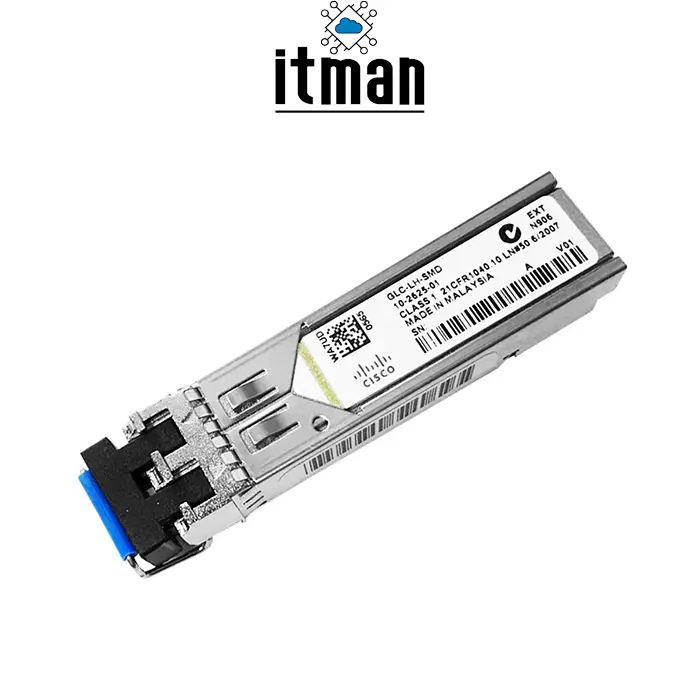
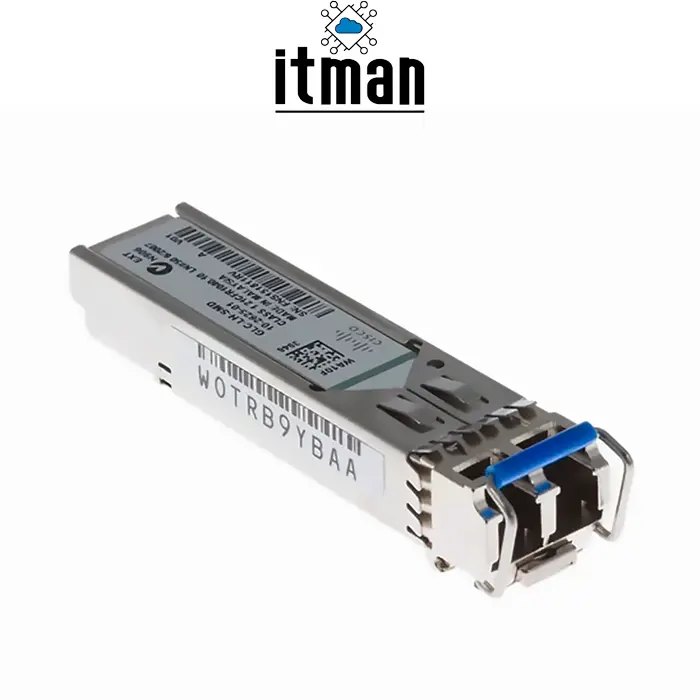
 Cisco GLC-LH-SMD is a professional Gigabit Ethernet SFP transceiver designed to provide reliable fiber connectivity for compatible Cisco switches and other Cisco networking devices. This 1000BASE-LX/LH module operates at a 1310nm wavelength and supports both single-mode and multimode fiber, making it a practical choice for enterprise networks, campus infrastructures, server rooms, and fiber links between Cisco switches. With a transmission distance of up to 10km over single-mode fiber, compact SFP design, and Digital Optical Monitoring capability, Cisco GLC-LH-SMD is an effective solution for extending and upgrading fiber-based Cisco switch connections.
Cisco GLC-LH-SMD Product Introduction
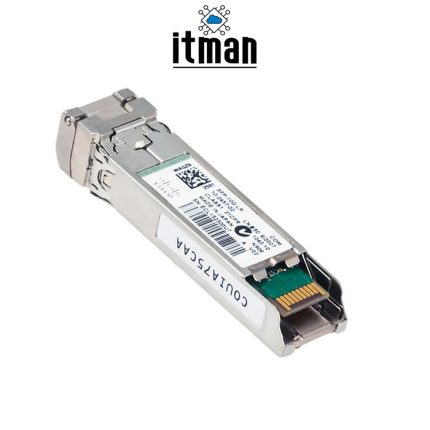
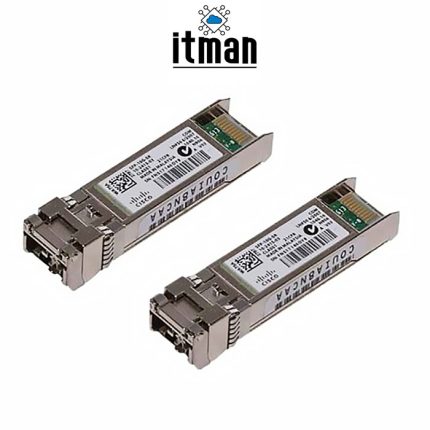
The Cisco GLC-LH-SMD is a 1000BASE-LX/LH SFP transceiver module identified by the exact part number GLC-LH-SMD. It is designed to convert electrical Gigabit Ethernet signals from a compatible Cisco networking device into optical signals for transmission over fiber, while performing the reverse conversion for incoming optical signals. The module uses a duplex LC/PC connector and works at a nominal 1310nm wavelength. According to Cisco’s specifications, Cisco GLC LH SMD supports single-mode fiber distances of up to 10km and multimode fiber distances of up to 550 meters. When using multimode fiber for a 1000BASE-LX/LH connection, the appropriate mode-conditioning patch cable should be considered, particularly with legacy multimode installations.
One of the most useful characteristics of Cisco GLC-LH-SMD is its Digital Optical Monitoring capability. DOM provides diagnostic information that can help network administrators monitor operating parameters and identify potential optical-link problems. This can be particularly valuable when troubleshooting intermittent fiber connections, abnormal optical levels, temperature-related issues, or transceiver-related faults. Cisco positions the GLC-LH-SMD as the DOM-equipped long-wavelength 1000BASE-LX/LH SFP option in its Gigabit Ethernet SFP family. The SFP form factor also makes installation straightforward because the module can be inserted directly into a compatible SFP slot without requiring a separate external media converter.
Cisco GLC-LH-SMD Optical Performance
Unlike a switch or router, Cisco GLC-LH-SMD does not have a conventional CPU or processor. Its primary function is physical-layer optical conversion. The module incorporates an optical transmitter and receiver that handle the conversion between electrical Ethernet signals and light traveling through fiber.
Cisco GLC-LH-SMD operates with a nominal Gigabit Ethernet data rate and supports the 1000BASE-LX/LH standard. The optical wavelength is 1310nm, which is considerably more suitable for longer fiber links than the 850nm wavelength commonly associated with 1000BASE-SX. This makes Cisco GLC LH SMD particularly useful when a network requires a Gigabit fiber connection between locations separated by hundreds of meters or several kilometers.
The actual performance of a Cisco GLC-LH-SMD installation depends on the complete optical path. Fiber quality, connector condition, patch panels, splices, optical attenuation, and the transceiver installed at the opposite end all affect link stability. For a 10km connection, using suitable single-mode fiber and compatible optical equipment at both ends is essential.
Cisco GLC-LH-SMD Memory
Cisco GLC-LH-SMD does not contain RAM in the same sense as a server, workstation, or laptop. As an optical transceiver, it does not require system memory for running applications or storing operating-system data. Instead, Cisco GLC LH SMD contains internal electronic components and identification information that allow the host networking device to recognize and monitor the optical module. DOM functionality can provide operational information such as optical parameters, temperature, and voltage, depending on the capabilities of the host platform and software.
Therefore, RAM capacity is not a specification that should be used to evaluate Cisco GLC-LH-SMD. For this product, optical characteristics, fiber compatibility, transmission distance, wavelength, connector type, DOM support, and host compatibility are far more important purchasing criteria.
Cisco GLC-LH-SMD Storage
Cisco GLC-LH-SMD does not include an SSD, HDD, or conventional storage system. It is a plug-in optical networking component rather than a computing device. Its internal electronics are designed to support identification, monitoring, and optical signal conversion.
When selecting this SFP module, storage capacity has no relevance. Instead, buyers should pay attention to the exact Cisco part number, optical standard, wavelength, fiber type, maximum supported distance, and compatibility with the intended Cisco switch or router.
The exact part number is particularly important because Cisco offers several visually similar Gigabit SFP modules with substantially different optical characteristics. Cisco GLC LH SMD should not be confused with GLC-SX-MMD, GLC-EX-SMD, GLC-ZX-SMD, or copper-based GLC-T modules.
Cisco GLC-LH-SMD Graphics Card
Cisco GLC LH SMD does not have a graphics processor or graphics card because it is not a computer. There is no GPU, video memory, display output, or graphical processing capability in this SFP transceiver.
The relevant “processing” capability of Cisco GLC-LH-SMD is optical signal transmission and reception. The module receives electrical data from the host device, converts it into an optical signal at the specified wavelength, transmits it through fiber, and converts incoming optical signals back into electrical data.
For this reason, GPU specifications such as graphics memory, clock speed, or display resolution have no meaning for Cisco GLC-LH-SMD. Evaluating this module based on its optical specifications rather than computer hardware specifications provides a much more accurate assessment of its suitability.
Cisco GLC-LH-SMD Physical Design and Build Quality
The Cisco GLC-LH-SMD uses the compact Small Form-Factor Pluggable, or SFP, design. Its small form factor allows multiple optical transceivers to be installed across network equipment without consuming the space required by larger fixed-interface modules. This is particularly advantageous in high-density Cisco switches where many fiber connections may be required within a single chassis.
The module is approximately 8.5 × 13.4 × 56.5mm, giving it a very compact footprint. The front-facing fiber interface uses a duplex LC/PC connector, allowing separate optical paths for transmission and reception. The compact construction also makes Cisco GLC-LH-SMD convenient for structured fiber installations where space inside network racks and cabinets is limited.
There is no display screen, pixel density, battery, keyboard, or touchscreen on Cisco GLC-LH-SMD. These characteristics belong to consumer electronics and laptops rather than optical networking modules. Instead, the physical design focuses on connector durability, compact installation, thermal management, optical alignment, and reliable operation inside compatible Cisco equipment.
The GLC-LH-SMD also supports an extended operating-temperature specification, with Cisco documentation identifying it as an extended-temperature version. This makes it appropriate for networking environments where temperature conditions can be less controlled than those found in a typical office.
Cisco GLC-LH-SMD Power Consumption
Cisco GLC-LH-SMD is designed as a low-power SFP optical module. Its power requirement is significantly lower than that of active network devices such as switches, routers, or servers.
Low power consumption is useful when many SFP modules are installed simultaneously because every transceiver contributes to the overall power and thermal load of the network device. Keeping optical modules efficient can therefore help maintain manageable operating temperatures in high-density network deployments.
Where Is Cisco GLC-LH-SMD Used?
Cisco GLC-LH-SMD is particularly useful for Gigabit Ethernet fiber links where copper Ethernet is unsuitable or where the required cable distance exceeds conventional copper Ethernet limits. Typical applications include connecting switches located in different network cabinets, creating fiber uplinks between floors of a building, connecting network equipment across campus buildings, and establishing longer-distance links within enterprise infrastructure.
Because Cisco GLC-LH-SMD supports both SMF and MMF applications, it can also be useful when integrating newer network equipment into existing fiber infrastructure. For single-mode fiber, the module can support distances up to 10km, while multimode applications can reach up to 550m under the specified conditions.
Ports and Connectivity
Cisco GLC-LH-SMD itself provides a duplex LC fiber interface rather than an RJ-45 copper port. The two optical paths are used for separate transmit and receive functions, creating a full-duplex Gigabit Ethernet connection.
The module is inserted into an SFP slot on a compatible Cisco networking device. Once installed, a suitable duplex fiber patch cable connects the SFP to another compatible optical transceiver or fiber networking interface. The connector and fiber type should be checked carefully before installation. Cisco GLC-LH-SMD is fundamentally different from copper SFP modules such as GLC-T, which use RJ-45 connectivity. It is also different from bidirectional BX modules because GLC-LH-SMD uses separate transmit and receive optical paths.
Cisco GLC-LH-SMD and DOM Diagnostics
Digital Optical Monitoring is one of the major advantages of Cisco GLC-LH-SMD compared with older Gigabit SFP designs without digital diagnostics. DOM allows supported Cisco platforms to obtain information from the transceiver and use that information for monitoring and troubleshooting.
For network administrators, this can simplify fault diagnosis. If a fiber connection becomes unstable, monitoring optical information can help determine whether the issue is related to the transceiver, optical power, temperature, voltage, or the physical fiber path.
This is particularly useful in larger network installations where manually testing every fiber connection would consume considerable time. Cisco GLC-LH-SMD therefore provides more than simple optical connectivity; it can also contribute to proactive network maintenance.
Cisco GLC-LH-SMD vs Similar Cisco SFP Modules
Choosing between Cisco SFP modules should be based on distance, fiber type, wavelength, and application rather than simply selecting the cheapest available module.
| Cisco Module | Standard | Wavelength | Fiber | Typical Maximum Distance |
|---|---|---|---|---|
| GLC-SX-MMD | 1000BASE-SX | 850nm | MMF | Up to 1km depending on MMF |
| GLC-LH-SMD | 1000BASE-LX/LH | 1310nm | MMF/SMF | Up to 550m MMF / 10km SMF |
| GLC-EX-SMD | 1000BASE-EX | 1310nm | SMF | Up to 40km |
| GLC-ZX-SMD | 1000BASE-ZX | 1550nm | SMF | Up to 70–100km depending on deployment |
| GLC-T | 1000BASE-T | Electrical | Copper | Up to 100m |
The Cisco GLC-LH-SMD is therefore positioned between short-range Gigabit SX modules and much longer-range EX or ZX optical modules. For many enterprise fiber links, the 10km SMF capability of Cisco GLC-LH-SMD provides a useful balance between reach and cost.
Important Points Before Buying
Before ordering Cisco GLC-LH-SMD, verify that the network device supports this exact SFP model or the corresponding 1000BASE-LX/LH optical specification. Fiber type should also be checked carefully.
For a 10km deployment, single-mode fiber is the appropriate choice. If Cisco GLC-LH-SMD is being used with multimode fiber, the maximum distance is considerably shorter, and a mode-conditioning patch cable may be required depending on the existing fiber infrastructure.
It is also important to distinguish GLC LH SMD from similarly named Cisco products. A module designed for 1000BASE-SX, 1000BASE-EX, 1000BASE-ZX, or 1000BASE-T may look similar but is not interchangeable for every application.
At ITMan, we offer Cisco GLC-LH-SMD for customers looking to expand or replace fiber connectivity in compatible Cisco network equipment. For project deployments, checking the exact switch or router model before purchase is recommended so the appropriate SFP can be selected.
Cisco GLC-LH-SMD Technical Specifications
| Specification | Cisco GLC-LH-SMD |
|---|---|
| Brand | Cisco |
| Part Number | GLC-LH-SMD |
| Product Type | SFP Transceiver Module |
| Ethernet Standard | 1000BASE-LX/LH |
| Ethernet Speed | 1Gbps |
| Maximum Data Rate | Approximately 1.25Gbps optical interface rate |
| Wavelength | 1310nm |
| Fiber Support | Single-Mode Fiber and Multimode Fiber |
| Maximum SMF Distance | Up to 10km |
| Maximum MMF Distance | Up to 550m |
| Connector | Duplex LC/PC |
| DOM | Supported |
| Form Factor | SFP |
| Operating Temperature | Extended range, approximately -5°C to 85°C |
| Storage Temperature | Approximately -40°C to 85°C |
| Power Consumption | Up to approximately 1W |
| Dimensions | Approximately 8.5 × 13.4 × 56.5mm |
| Interface Type | Optical Fiber |
| Application | Gigabit Ethernet |
| Laser Safety | Class 1 |
| Standard | IEEE 802.3z |
| Monitoring | Digital Optical Monitoring |
| Installation | Pluggable SFP interface |
Frequently Asked Questions
1. What is Cisco GLC-LH-SMD?
Cisco GLC LH SMD is a 1000BASE-LX/LH SFP optical transceiver designed for Gigabit Ethernet fiber connectivity.
2. What is the speed of Cisco GLC-LH-SMD?
Cisco GLC-LH-SMD is designed for 1Gbps Gigabit Ethernet connectivity and has an optical interface data rate of approximately 1.25Gbps.
3. What wavelength does Cisco GLC-LH-SMD use?
Cisco GLC LH SMD operates at a nominal wavelength of 1310nm.
4. How far can Cisco GLC-LH-SMD transmit?
With suitable single-mode fiber, Cisco GLC-LH-SMD can support distances of up to 10km. With multimode fiber, the specified distance is up to 550m.
5. Does Cisco GLC-LH-SMD support multimode fiber?
Yes. Cisco GLC LH SMD supports both single-mode and multimode fiber applications. For multimode installations, the appropriate mode-conditioning patch cable may be required.
6. What connector does Cisco GLC-LH-SMD use?
The module uses a duplex LC/PC optical connector.
7. Does Cisco GLC LH SMD support DOM?
Yes. Cisco GLC-LH-SMD includes Digital Optical Monitoring capability.
8. Is Cisco GLC-LH-SMD a copper SFP?
No. Cisco GLC-LH-SMD is a fiber-optic SFP. It should not be confused with copper Gigabit modules such as GLC-T.
9. Is Cisco GLC-LH-SMD suitable for 10km connections?
Yes. A key application for Cisco GLC LH SMD is Gigabit Ethernet transmission over single-mode fiber for distances of up to 10km.
10. What is the difference between GLC-LH-SMD and GLC-SX-MMD?
GLC-LH-SMD uses a 1310nm long-wavelength design and supports up to 10km over SMF, while GLC-SX-MMD uses 850nm optics and is primarily intended for multimode fiber and shorter distances.
Conclusion
Cisco GLC-LH-SMD is a versatile 1000BASE-LX/LH SFP transceiver designed for dependable Gigabit Ethernet fiber connectivity. Its 1310nm wavelength, duplex LC/PC interface, support for single-mode and multimode fiber, up to 10km SMF reach, and DOM capability make it a practical choice for enterprise networks and professional fiber infrastructure. Compared with short-range SX modules, Cisco GLC-LH-SMD provides considerably greater reach, while remaining more economical and straightforward for applications that do not require the extreme distances supported by EX or ZX transceivers. If you need a Cisco-compatible Gigabit fiber module for a 10km-class single-mode connection or a suitable multimode LX/LH application, Cisco GLC LH SMD is a strong option available from ITMan.





















Reviews
There are no reviews yet.