







 ? Message us on
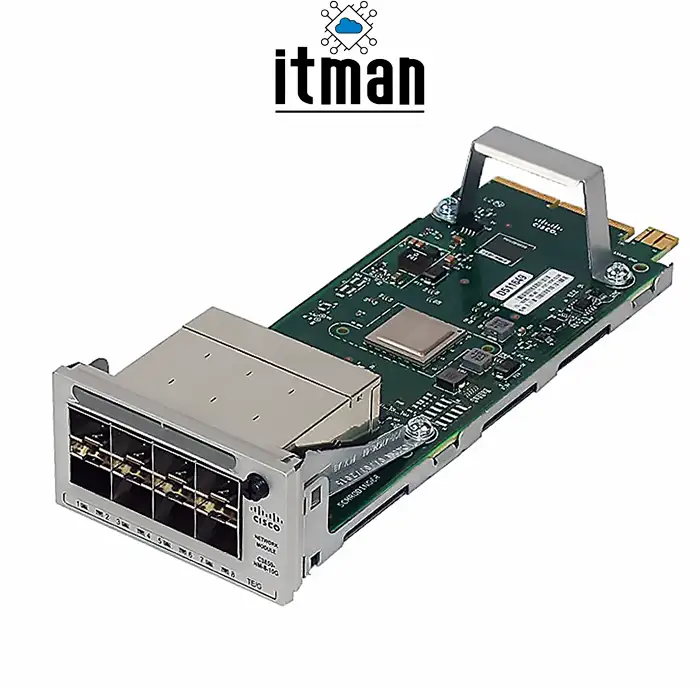
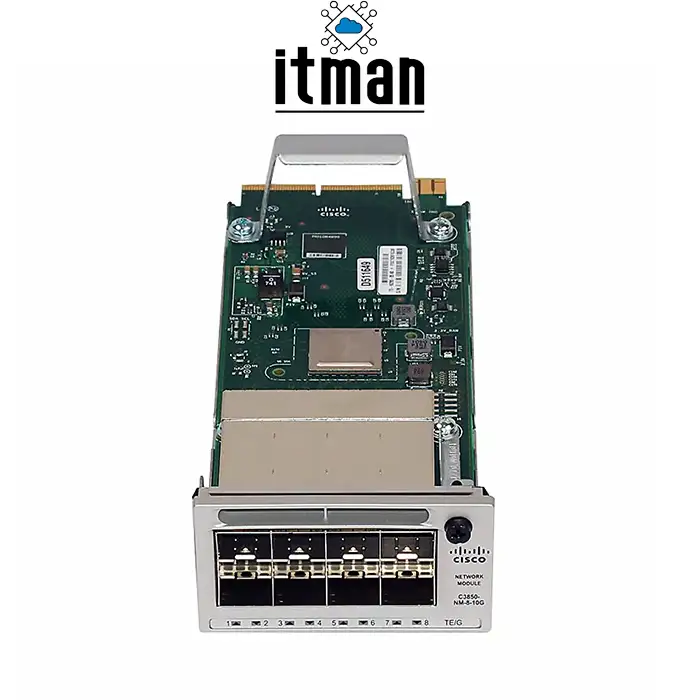
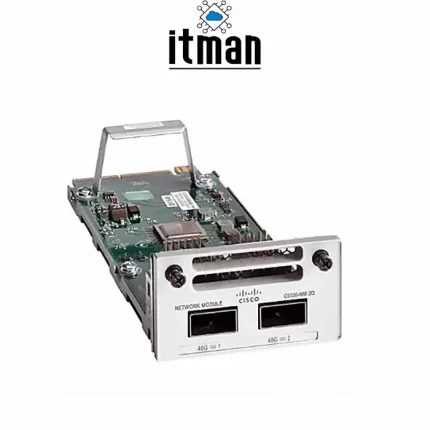
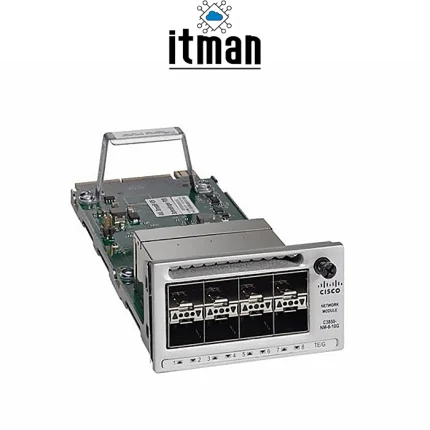
 The Cisco C3850-NM-8-10G Network Module is an expansion module designed to provide high-speed uplink connectivity for compatible Cisco 3850 Series switches. Built for enterprise networks where higher uplink capacity, fiber connectivity, and flexible network expansion are required, this module extends the capabilities of a compatible Catalyst 3850 switch without requiring a complete replacement of the switching platform. With support for multiple high-speed interfaces, the Cisco C3850-NM-8-10G is particularly suitable for network environments that need reliable connections between access switches, distribution switches, servers, or other network infrastructure.
Cisco C3850-NM-8-10G Network Switch
The Cisco C3850-NM-8-10G is part of Cisco’s modular approach to the Catalyst 3850 platform. Instead of relying only on fixed uplink interfaces, compatible Catalyst 3850 switches can use interchangeable network modules to adapt their uplink configuration to different network requirements. The C3850-NM-8-10G is aimed at deployments requiring substantially more uplink flexibility and bandwidth than basic 1 Gigabit Ethernet modules can provide. This makes it useful when upgrading an existing network from Gigabit Ethernet uplinks to 10 Gigabit Ethernet or when several high-speed fiber connections are required from the same switch. ITMan supplies the Cisco C3850-NM-8-10G Network Module for businesses, IT departments, system integrators, and network administrators looking to expand compatible Cisco Catalyst infrastructure.
Processing Architecture of Cisco C3850-NM-8-10G
The Cisco C3850-NM-8-10G does not contain an independent general-purpose processor comparable to the CPU installed in a switch, router, server, or computer. It is a network expansion module and operates as part of the architecture of the Cisco Catalyst 3850 switch in which it is installed. Switching decisions, management functions, IOS XE operations, routing processes, and other control-plane functions remain the responsibility of the host switch.
The importance of the module is therefore not measured by CPU specifications. Its primary function is to provide the physical high-speed interfaces required to extend the uplink capabilities of the Catalyst 3850 platform. This architecture also means administrators can upgrade connectivity without introducing another independently managed network device.
RAM of the Cisco C3850-NM-8-10G
The Cisco C3850-NM-8-10G Network Module does not have user-accessible or independently configurable system RAM. Memory resources required for switch operation are provided by the Catalyst 3850 chassis itself.
For buyers, this distinction is important because RAM capacity should not be considered when comparing Catalyst 3850 network modules. Instead, the selection should be based on factors such as port count, supported interface speeds, transceiver requirements, switch compatibility, and the bandwidth required for the intended network design.
Storage and Flash Memory
There is no HDD, SSD, or user-accessible flash storage integrated into the Cisco C3850-NM-8-10G for storing operating systems, configuration files, backups, or user data. Storage functions are handled by the Catalyst 3850 switch itself.
The Cisco C3850-NM-8-10G should therefore be viewed as an interface expansion component rather than a standalone network appliance. Cisco IOS XE and the switch configuration remain on the host switch, while the module extends the physical connectivity available to that switch.
Design, Build Quality and Physical Construction
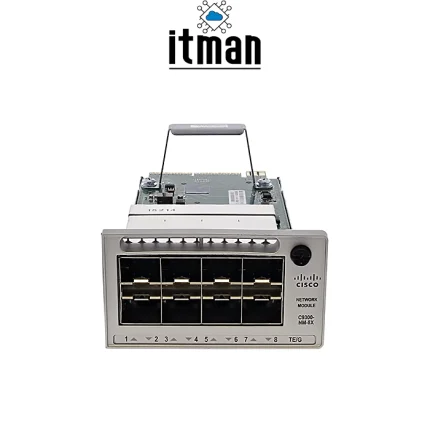
The Cisco C3850-NM-8-10G has a compact modular design specifically intended for installation into the network-module bay of supported Catalyst 3850 switches. Its metal enclosure provides the mechanical protection expected from enterprise networking hardware while helping integrate the module properly with the switch chassis.
The front panel is designed around the network interfaces and associated indicators, keeping cabling organized and allowing administrators to identify connection status quickly. Since the module occupies the dedicated uplink-module slot rather than an additional rack unit, it can increase connectivity without increasing rack-space requirements.
Cisco designed these modules for enterprise environments where equipment may operate continuously for extended periods. The construction, connectors, PCB layout, and physical mounting system are therefore designed around reliable integration with the Catalyst 3850 platform.
Applications of Cisco C3850-NM-8-10G
The Cisco C3850-NM-8-10G is particularly useful when a Catalyst 3850 is deployed as an access or distribution switch and requires multiple high-speed uplinks. A typical example is an enterprise access switch carrying traffic from numerous users, IP phones, wireless access points, cameras, or other endpoints toward the network core.
Using 10 Gigabit Ethernet uplinks can help prevent the uplink from becoming a bottleneck when traffic from many access ports is aggregated. The module can also be useful for switch-to-switch connections, fiber uplinks between network cabinets, connections toward distribution infrastructure, and environments where redundant high-bandwidth paths are required.
For organizations already operating Catalyst 3850 switches, upgrading the network module can be more practical than replacing the complete switch simply to obtain different uplink connectivity.
Ports on the Cisco C3850-NM-8-10G Network Module
One of the main reasons to choose the Cisco C3850-NM-8-10G is its high-density uplink configuration. The module provides eight physical SFP/SFP+ interface positions, with a combination of ports designed for 1 Gigabit and 1/10 Gigabit Ethernet operation.
Its port architecture consists of four SFP interfaces intended for 1 Gigabit Ethernet and four SFP+ interfaces capable of 1 Gigabit or 10 Gigabit Ethernet operation. This gives administrators considerable flexibility when combining existing 1G infrastructure with faster 10G uplinks.
Actual connectivity depends on the transceiver installed and the compatibility requirements of the host switch. Before purchasing optical modules or DAC cables, administrators should verify the required speed, fiber type, wavelength, distance, and Cisco compatibility.
Why Use Cisco C3850-NM-8-10G for a 10G Network Upgrade?
Replacing an entire switch simply because additional 10G interfaces are required can be unnecessary when the existing Catalyst 3850 still meets the network’s access-layer requirements. The Cisco C3850-NM-8-10G provides an upgrade path by changing the uplink capabilities of the switch.
This is especially useful when network traffic has increased since the original infrastructure was installed. An organization may initially deploy 1G uplinks and later add Wi-Fi infrastructure, IP cameras, additional users, virtualization traffic, or other bandwidth-intensive applications. Moving suitable uplinks to 10GbE can provide additional headroom while retaining the existing Catalyst switching environment.
Choosing Transceivers for Cisco C3850-NM-8-10G
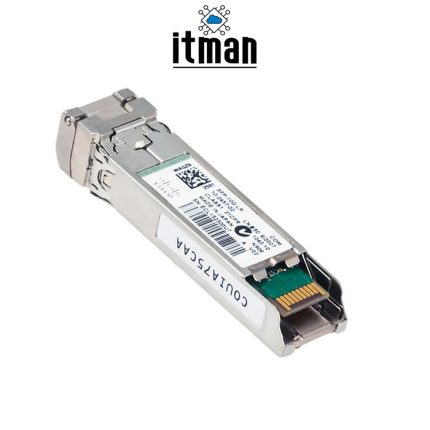
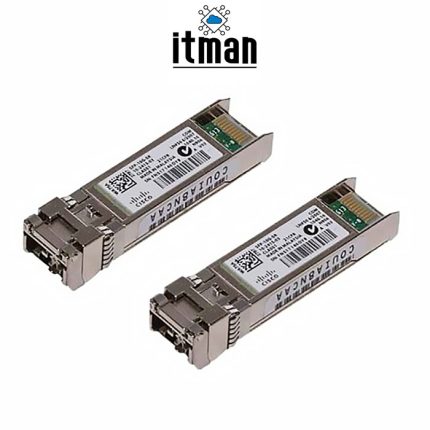
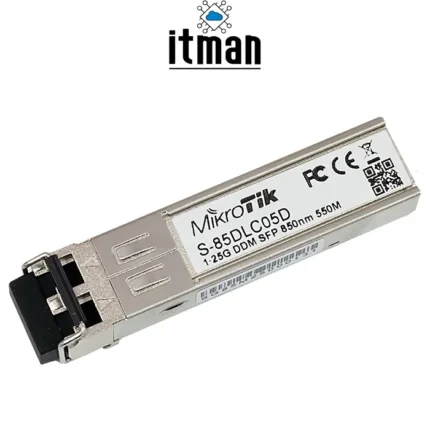
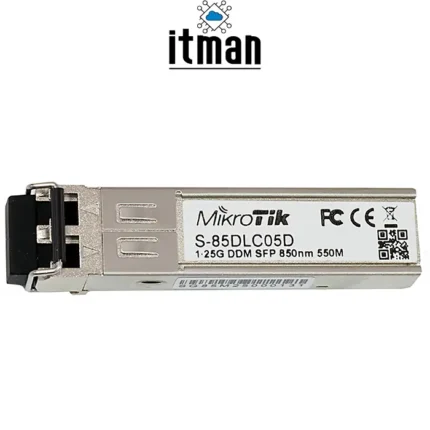
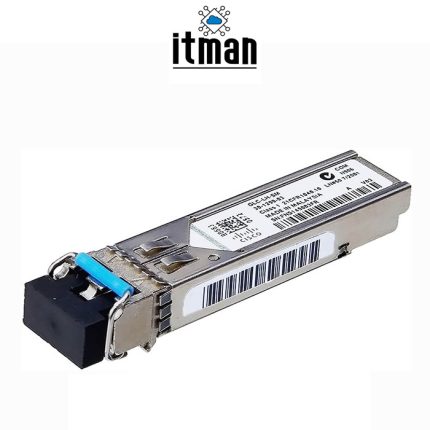
Choosing the correct transceiver is as important as selecting the module itself. For short-distance multimode fiber connections, an appropriate 10G SR optical transceiver may be suitable, while longer single-mode links commonly require an LR-class transceiver. Gigabit interfaces require compatible 1G SFP modules.
Administrators should not select a transceiver solely because its physical form factor fits the slot. Interface speed, fiber type, wavelength, distance, connector type, and Cisco compatibility should all be checked before deployment.
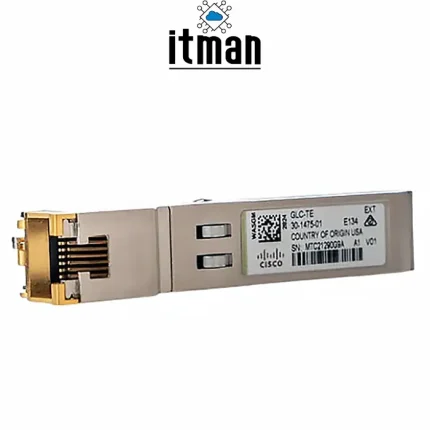
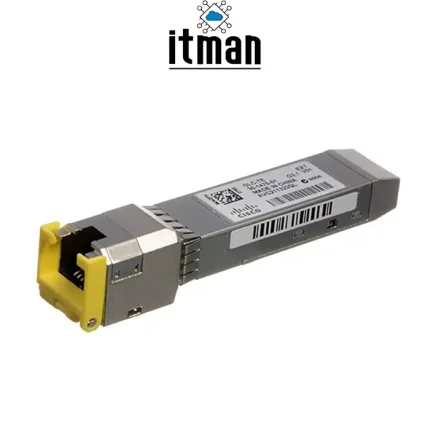
For DAC-based connections within a rack or between nearby devices, compatible direct-attach cabling may also provide a practical option depending on the specific configuration and compatibility requirements.
Cisco C3850-NM-8-10G vs Similar Cisco Network Modules
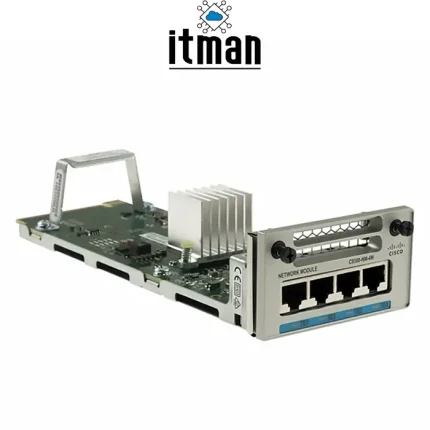
Cisco offers several network modules for the Catalyst 3850 family, allowing administrators to select an uplink configuration appropriate for their deployment. Two well-known alternatives are the C3850-NM-4-1G and C3850-NM-2-10G.
The C3850-NM-4-1G is intended for networks where Gigabit Ethernet uplinks are sufficient. The C3850-NM-2-10G provides a combination that allows migration toward 10GbE with fewer high-speed interfaces. The Cisco C3850-NM-8-10G provides a denser interface configuration and is better suited to deployments requiring several physical uplink connections and greater 10GbE flexibility.
| Feature | C3850-NM-4-1G | C3850-NM-2-10G | Cisco C3850-NM-8-10G |
|---|---|---|---|
| Product Type | Network Module | Network Module | Network Module |
| Platform | Catalyst 3850 | Catalyst 3850 | Catalyst 3850 |
| Physical Ports | 4 | 4 | 8 |
| 1G SFP Ports | 4 | 2 dedicated | 4 dedicated |
| 1G/10G SFP+ Ports | None | 2 | 4 |
| Maximum Interface Speed | 1GbE | 10GbE | 10GbE |
| 10GbE Capability | No | Yes | Yes |
| Primary Use | Basic uplinks | Mixed 1G/10G uplinks | Higher-density uplinks |
| Fiber Connectivity | Yes | Yes | Yes |
| Upgrade Potential | Basic | Medium | High |
Benefits of Cisco C3850-NM-8-10G
A major advantage of the Cisco C3850-NM-8-10G is flexibility. It allows an existing Catalyst 3850 deployment to accommodate both established Gigabit Ethernet infrastructure and higher-bandwidth 10 Gigabit Ethernet connectivity.
The eight-port physical configuration can also simplify network designs where several uplinks are required. Instead of relying on a module with only a small number of interfaces, administrators have additional options for redundant paths, switch interconnections, fiber links, and different uplink configurations.
Another advantage is platform integration. Since the module is designed for the Catalyst 3850 family, administrators can expand the switch without introducing a separate standalone device solely to obtain additional high-speed interfaces.
Technical Specifications of Cisco C3850-NM-8-10G
| Specification | Details |
|---|---|
| Manufacturer | Cisco |
| Model | C3850-NM-8-10G |
| Product Type | Network/Uplink Module |
| Compatible Platform | Cisco Catalyst 3850 Series |
| Total Physical Interface Positions | 8 |
| Dedicated SFP Interfaces | 4 |
| SFP+ Interfaces | 4 |
| Dedicated SFP Port Speed | 1 Gigabit Ethernet |
| SFP+ Port Speed | 1/10 Gigabit Ethernet |
| Maximum Interface Speed | 10GbE |
| Media Type | Depends on installed transceiver |
| Fiber Support | Yes, with compatible optical transceiver |
| Copper/DAC Support | Configuration and compatibility dependent |
| Form Factor | Plug-in Network Module |
| Installation Location | Catalyst 3850 Network Module Slot |
| Standalone Operation | No |
| Independent CPU | No |
| User-Configurable RAM | No |
| HDD/SSD Storage | No |
| Management | Through host Catalyst 3850 switch |
| Primary Purpose | High-speed uplink expansion |
| Typical Applications | Switch uplinks, aggregation, fiber connectivity, 10GbE upgrades |
FAQ About Cisco C3850-NM-8-10G
1. What is the Cisco C3850-NM-8-10G?
The Cisco C3850-NM-8-10G is a network expansion module designed to add additional high-speed uplink interfaces to compatible Cisco Catalyst 3850 switches.
2. How many ports does the Cisco C3850-NM-8-10G have?
It provides eight physical interface positions, consisting of four SFP ports and four SFP+ ports.
3. Does Cisco C3850-NM-8-10G support 10GbE?
Yes. Its SFP+ interfaces support 10 Gigabit Ethernet connectivity with appropriate compatible transceivers or supported cabling.
4. Can the C3850-NM-8-10G use 1G connections?
Yes. The module supports Gigabit Ethernet connectivity, including dedicated 1G SFP interfaces and 1G operation on its appropriate dual-rate interfaces.
5. Is the Cisco C3850-NM-8-10G a switch?
No. It is an expansion module and requires a compatible Cisco Catalyst 3850 switch to operate.
6. Does the C3850-NM-8-10G include SFP modules?
The network module and optical transceivers are separate components unless a particular seller or package explicitly states that transceivers are included.
7. Can I use the Cisco C3850-NM-8-10G for fiber connections?
Yes. Compatible optical SFP or SFP+ transceivers can be used for fiber connectivity.
8. What is the difference between C3850-NM-2-10G and C3850-NM-8-10G?
The C3850-NM-8-10G provides eight physical interface positions with four 1G SFP and four 1G/10G SFP+ interfaces, giving it greater port density than the C3850-NM-2-10G.
9. Does the Cisco C3850-NM-8-10G have RAM or storage?
It does not provide user-configurable system RAM or storage. These resources belong to the Catalyst 3850 host switch.
10. Can the C3850-NM-8-10G be used as a standalone network device?
No. The module cannot operate independently and must be installed in a compatible Catalyst 3850 switch.
11. Can I use both 1G and 10G links on the module?
Yes, the module is specifically useful in environments requiring a combination of Gigabit and 10 Gigabit Ethernet uplinks, subject to the supported port configuration.
12. Where can I buy Cisco C3850-NM-8-10G?
The Cisco C3850-NM-8-10G Network Module is available from ITMan. Customers can contact ITMan for current availability, pricing, and assistance with selecting compatible Cisco transceivers.
Conclusion
The Cisco C3850-NM-8-10G Network Module is a practical expansion option for organizations using compatible Cisco Catalyst 3850 switches that need greater uplink density and 10 Gigabit Ethernet capability. With eight physical interface positions, including four dedicated 1G SFP interfaces and four 1G/10G SFP+ interfaces, it provides a flexible combination for enterprise fiber uplinks, switch interconnections, aggregation, and network bandwidth upgrades.
For networks where the Catalyst 3850 platform remains suitable but existing uplink capacity is no longer sufficient, installing a Cisco C3850-NM-8-10G can extend the useful capabilities of the existing infrastructure without replacing the complete switching platform. The Cisco C3850-NM-8-10G Network Module is available from ITMan for customers looking for Cisco networking equipment and compatible infrastructure components.




















Reviews
There are no reviews yet.